“Shaving” is the word most people use for it, and it is the part of veneers that worries people most. The picture that comes to mind is a row of filed-down stubs, and it is not what standard veneer preparation looks like.
This guide explains how much tooth is actually removed, why, how that compares with a crown, when no-prep veneers avoid it, and what the change means for your teeth over the long term. The figures for Bedford Dental Group are the practice’s own; the research behind them is linked where it appears.
Do You Really Have to Shave Your Teeth for Veneers?
Yes, dentists shave your teeth for standard porcelain veneers, but only a thin layer. At Bedford Dental Group, 0.3 to 0.5 mm of enamel is removed from the front of each tooth so the veneer sits flush. No-prep veneers remove little or none but suit fewer cases. Enamel does not grow back, so preparation is permanent.
The reduction is limited to the front surface and edge of the tooth. The rest of the tooth, including its core and root, stays where it is. As the American Dental Association puts it, the treatment is not reversible because enamel is removed, which is why the amount removed is planned before any tooth is touched.
Why Shaving Is Necessary
A porcelain veneer has thickness of its own. Bonded to an unprepared tooth, it adds that thickness to the front of the tooth, and the result can look and feel bulky, sit out from the gum line, or change how the lips rest. Removing a thin layer of enamel makes room for the porcelain so the finished tooth keeps a natural profile.
The second reason is bonding. Veneers are bonded, not just cemented, and adhesive bonds hold best to enamel. A study of enamel thickness on 114 extracted front teeth set out the aim plainly: keep the preparation in enamel and avoid exposing dentin, the softer layer underneath, because resin bonds better to enamel.
How Much Enamel Is Removed
Bedford’s standard preparation is 0.3 to 0.5 mm, done under local anesthetic. The depth is not one number for every tooth: it is set by the approved design, so a tooth that is already small or set back may need less, and one that sits forward may need a little more.
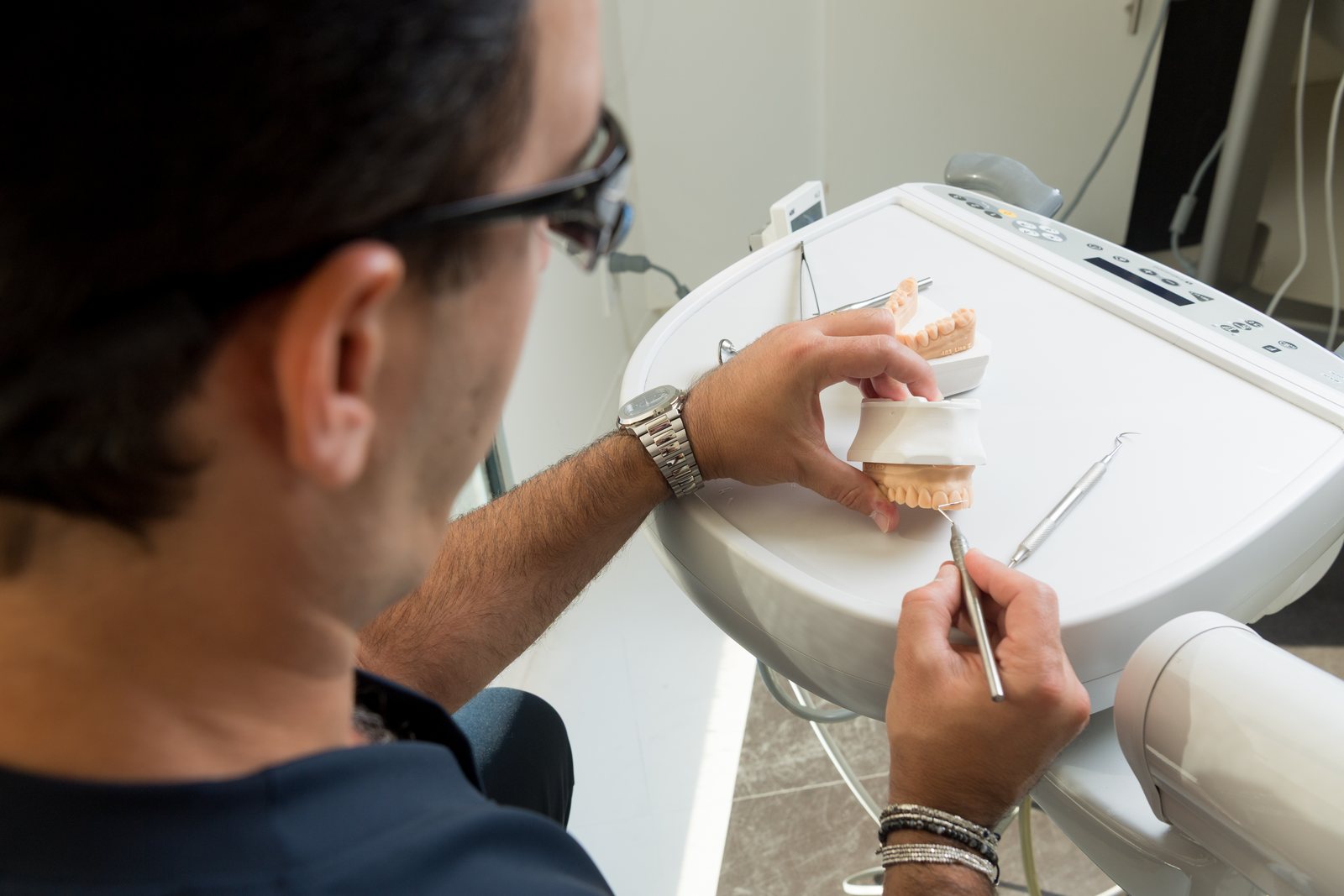
In each of Bedford’s published veneer case studies, the case record lists the preparation as “minimal preparation, guided by a mock-up.” A mock-up is a trial version of the new smile placed over the existing teeth, so the doctor reduces only where the new shape needs room, rather than removing a uniform layer everywhere.
How much tooth do veneers remove compared with crowns?
A veneer covers the front of a tooth. A crown covers all of it, so it needs much more tooth removed. The table shows how the options compare at Bedford.
| Option | Tooth removed | Reversible? | Expected lifespan | Best for |
|---|---|---|---|---|
| Porcelain veneers | 0.3 to 0.5 mm, front surface only | No | 10 to 20 years | Changing shape and color across several visible teeth |
| No-prep veneers | 0 to 0.3 mm, front surface only | In some cases | 10 to 20 years | Small, short or worn teeth, thin enamel, and spacing |
| Composite bonding | Minimal to none | Yes | 3 to 10 years, typically 5 to 7 | A small chip, or a change you want to trial first |
| Full-coverage crown | 1 to 1.5 mm, all the way around | No | 10 to 15 years | Teeth that are cracked, heavily filled or root-treated |
Research puts numbers on the difference. A laboratory study of preparation designs for front teeth found that veneer preparations removed roughly 3% to 30% of the visible tooth structure by weight, while crown preparations removed roughly 63% to 72%. Preparing a tooth for a metal-ceramic crown removed 4.3 times as much as a front-surface veneer.
That is why Bedford’s doctors recommend a crown only when a tooth needs the structural support of full coverage. Where the tooth is intact and the concern is how it looks, a veneer conserves considerably more of it.
When Veneers Require Tooth Shaving (and When They Don’t)
Whether a tooth needs preparation depends on the type of veneer, where the tooth sits, and what the design asks of it.
Traditional Porcelain Veneers
Standard porcelain veneers need the 0.3 to 0.5 mm preparation described above. Bedford’s veneers are made by Beverly Hills Dental Lab in two porcelains: hand-layered feldspathic porcelain, which can be made very thin, and pressed lithium disilicate (e.max) with a hand-layered surface, which is stronger. Porcelain veneers are expected to last 10 to 20 years with routine care.
Composite Veneers
Composite is tooth-colored resin shaped directly on the tooth, usually in one visit, with little or no enamel removed. That makes it reversible, which suits a single small chip or someone who wants to try a change before committing to porcelain. The trade-off is durability and color: composite stains over time and typically needs replacing every 5 to 7 years. The comparison of porcelain and composite veneers goes into the choice in more detail.
No-Prep Veneers (and Lumineers)
No-prep veneers are porcelain veneers made thin enough, about 0.2 to 0.3 mm, to bond onto the tooth with 0 to 0.3 mm of enamel removed. Bedford’s no-prep veneers are made by Beverly Hills Dental Lab and carry the same $3,950 per tooth fee as standard veneers.
Lumineers is a brand name for one kind of no-prep veneer. Bedford does not place Lumineers; its no-prep veneers come from the same laboratory and materials as its standard veneers. The guide to no-prep veneers covers who they suit and how long they last.
Is Tooth Shaving Painful or Risky?
Preparation is done under local anesthetic, so the appointment is not painful while it is happening; most people describe pressure and vibration rather than pain. Bedford also offers nitrous oxide, conscious sedation and general anesthesia for patients with dental anxiety, and every one of its published veneer case studies was done with oral conscious sedation.
The main risks come from removing too much: exposing dentin, which weakens the bond, and lasting sensitivity. Both are avoided by planning the depth from an approved design rather than preparing freehand.
What Patients Typically Feel During the Process
Veneers at Bedford take about two weeks over three visits:
- Consultation and design. Records, a digital scan and a smile design, approved before any tooth is prepared.
- Preparation and temporaries. The teeth are prepared under local anesthetic, scanned for the laboratory, and fitted with temporary veneers made from the approved design. You wear them through normal eating, speaking and smiling, and anything that feels long or bulky is adjusted before the final porcelain is made.
- Try-in and bonding. The finished veneers are tried in before anything is bonded, so shade and shape can still change. Once you approve them, each veneer is bonded and the bite is checked.
Most people notice some sensitivity to hot and cold while the temporaries are in and for a few days after bonding, which settles as the teeth adjust. The veneer process page walks through each visit.
How Cosmetic Dentists Prevent Over-Shaving
Over-preparation usually comes from removing a uniform layer before the final shape has been decided. Bedford’s sequence works the other way round:
- The design comes first. The smile design is approved before preparation, so the doctor knows where the new tooth surface will be.
- The mock-up guides the depth. Preparing through a trial version of the new smile means enamel is removed only where the new shape needs room.
- The temporaries test it. Temporaries made from the same design show whether anything is too long or too bulky while the change is still easy to make.
- Conservative options are weighed. Where the teeth allow it, no-prep veneers or bonding remove less, and Bedford’s doctors assess which approach a tooth can support before any enamel is touched.
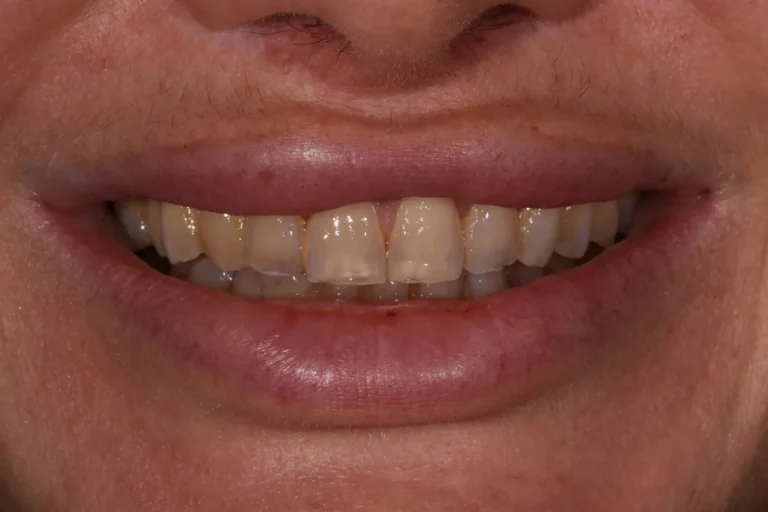
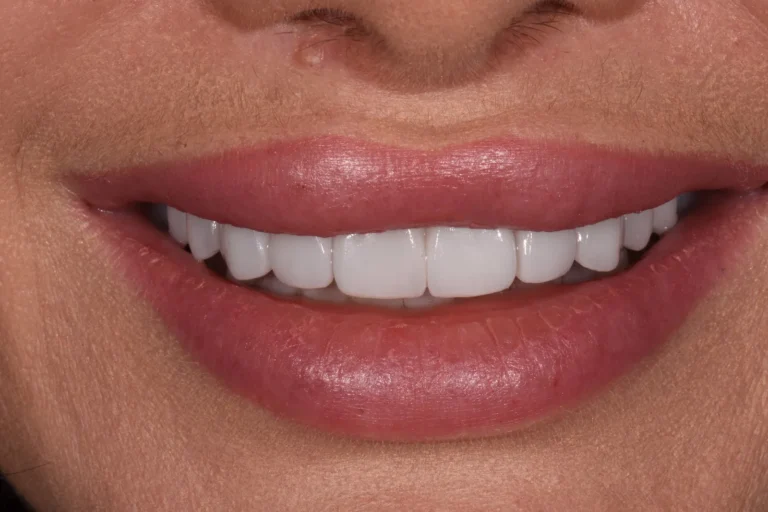
Individual results vary. The photographs shown are of actual Bedford Dental Group patients and have not been altered. Similar results are not guaranteed.
What Your Teeth Look Like Under Veneers
The “filed to stubs” picture belongs to crowns, not veneers. Under a standard veneer, the tooth is the same tooth with a slightly reduced front surface and edge. It keeps its shape, its core and its root.
Removing that layer does make the tooth more flexible for a time, and bonding the veneer restores most of that stiffness. In a laboratory study of veneers bonded to front teeth, removing the front enamel made the crown of the tooth about 2.2 times more flexible, and bonding a porcelain veneer brought it back to 96% of its original stiffness.
The tooth underneath still needs care. Decay can start at the edge of a veneer, so flossing and regular cleanings matter as much afterward as before.
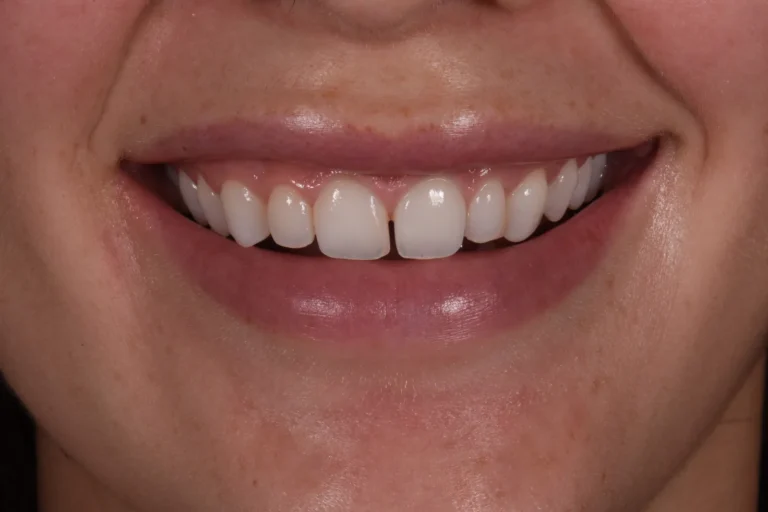
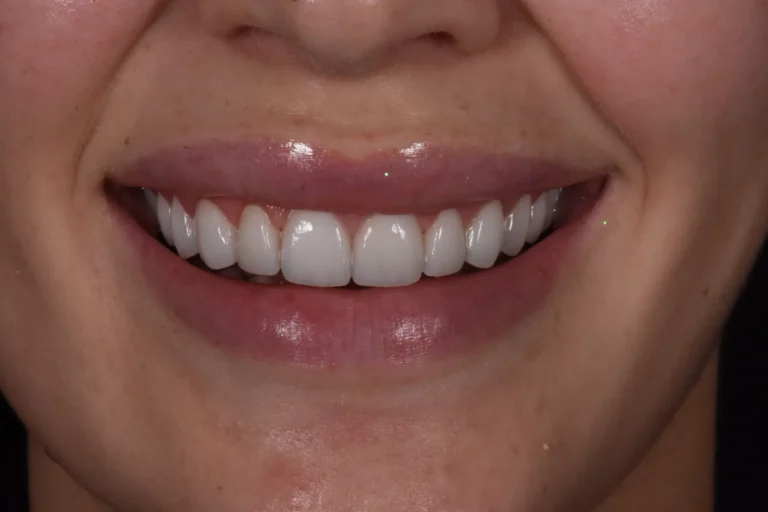
Individual results vary. The photographs shown are of actual Bedford Dental Group patients and have not been altered. Similar results are not guaranteed.
Can You Avoid Shaving Altogether?
Sometimes. No-prep veneers can avoid preparation, or keep it to a fraction of a millimeter, when the teeth already have room for porcelain to be added. Whether yours do is a clinical judgment made at the consultation, not a choice from a menu.
Ideal Candidates for No-Prep Veneers
At Bedford, no-prep veneers suit:
- Teeth that are small, short or worn down
- Teeth with thin enamel, where preparation would reach dentin
- Spacing or gaps between teeth
In each of these, the tooth has room for porcelain to be added without making it look bulky, which is what makes skipping preparation possible.
When Traditional Veneers Are Still the Better Choice
Teeth that are already full-sized, sit forward, or are out of line usually need preparation, because porcelain added on top would make them look bulky. Teeth that are dark inside generally need standard veneers too, since a thin no-prep veneer cannot fully mask deep discoloration. In those cases, standard veneers with a planned 0.3 to 0.5 mm preparation give the more natural result.
What Happens If Too Much Enamel Is Removed?
When preparation goes into dentin, the bond is weaker and the veneer is more likely to fail. A study of 580 porcelain veneers followed for up to 12 years found 99% survival when the preparation stayed in enamel, while veneers bonded mostly to dentin were about 10 times more likely to fail.
Over-prepared teeth can also be more sensitive, and the extra reduction cannot be undone. A tooth that has lost too much structure may later need a crown rather than a new veneer.
Bedford treats patients whose earlier veneers were not right. In one veneer revision case, the teeth had been over-prepared during the previous treatment, and the old veneers were replaced with 20 e.max veneers. Removing veneers placed elsewhere carries an additional fee, quoted for the case. If you are unsure about veneers you already have, a second opinion before more work is done can save tooth structure.
How much do veneers cost at Bedford Dental Group?
Porcelain veneers at Bedford Dental Group are $3,950 per tooth, and no-prep veneers carry the same fee. The fee includes the consultation and diagnostic records, the digital scan and smile design, anesthetic, temporaries, all laboratory fees, and the one-week and six-month post-operative visits. Full-mouth cases also include a custom occlusal guard.
There is no package price: the number of veneers is set by your smile, and your written plan gives the count and the total after the consultation. The porcelain veneers cost guide and the no-prep veneers cost guide explain what is and is not included.
Caring for Your Teeth After Getting Veneers
Veneers need the same care as natural teeth, with a few additions.
Oral Hygiene Tips for Veneer Longevity
- Brush twice a day with a soft-bristled brush and a non-abrasive toothpaste; abrasive whitening toothpastes dull the surface glaze.
- Floss daily, paying attention to the edges of the veneers, where decay in the tooth underneath can start.
- Avoid biting ice, pens and other hard objects.
- Wear a night guard if you grind your teeth. Untreated grinding is the most common reason a veneer fails early.
When to Schedule Maintenance Visits
Bedford’s fee includes post-operative visits one week and six months after bonding. After that, regular cleanings and check-ups keep the gums at the veneer edges healthy. The veneer aftercare page has more.
Why Patients Choose Bedford Dental Group
Bedford Dental Group has practiced on Bedford Drive in Beverly Hills since 1991 and has placed more than 50,000 veneers. Four of its seven doctors place veneers, including Dr. Daniel Naysan and a prosthodontist, a specialist in restoring and replacing teeth.
For preparation specifically, that means a design approved before any enamel is removed, mock-up-guided preparation, temporaries you test before the final porcelain is made, and no-prep veneers where the teeth allow them. You can read how Bedford’s porcelain veneers are planned, made and placed, and whether veneers are permanent in the veneers FAQ.
Frequently Asked Questions
Do veneers ruin your natural teeth?
No. Preparing a tooth for a veneer removes a thin layer of enamel, 0.3 to 0.5 mm at Bedford, and the tooth underneath stays healthy and functional. It is permanently altered rather than damaged. It can still decay at the edge of the veneer, so flossing and regular cleanings matter afterward.
Can veneers be done without shaving teeth?
Sometimes. No-prep veneers remove 0 to 0.3 mm of enamel and suit small, short or worn teeth, thin enamel and spacing. Teeth that are already full-sized, sit forward or are dark inside usually need standard veneers with a planned preparation.
Is tooth shaving permanent?
Yes. Enamel does not grow back, so a tooth prepared for a veneer will need a veneer or a crown from then on. Veneers are replaced at the end of their 10 to 20 year lifespan rather than removed. No-prep veneers are the exception in some cases.
Can shaved teeth grow back?
No. Enamel is not living tissue and does not regenerate once it is removed. The tooth underneath stays strong once the veneer is bonded, and in laboratory testing a bonded porcelain veneer restored 96% of the tooth’s original stiffness.
Are no-prep veneers more expensive?
Not at Bedford Dental Group. No-prep veneers cost $3,950 per tooth, the same as standard porcelain veneers, with the same inclusions: consultation and records, digital scan and smile design, anesthetic, temporaries, laboratory fees, and the one-week and six-month post-operative visits.
Do they remove your teeth for veneers?
No. Veneers are bonded to your own teeth, which stay in place. Only a thin layer of enamel is removed from the front surface, 0.3 to 0.5 mm for standard veneers at Bedford, and none or almost none for no-prep veneers.
How much do they shave your teeth for veneers?
At Bedford Dental Group, standard preparation removes 0.3 to 0.5 mm of enamel from the front surface of each tooth. The exact depth is guided by a mock-up of the approved design, so enamel is removed only where the new shape needs room. A crown, by comparison, removes 1 to 1.5 mm all the way around the tooth.
Do they shave your teeth for composite veneers?
Usually very little or not at all. Composite is shaped directly onto the tooth, so it needs little or no enamel removed and can be reversed. It typically lasts 5 to 7 years and stains more easily than porcelain, which is expected to last 10 to 20 years.
Schedule a Veneer Consultation
At a consultation, a Bedford doctor examines your teeth, tells you whether they need preparation, how much, or whether no-prep veneers would work, and gives you a written plan with the number of veneers and the total before anything is done.
Book a veneer consultation or call (310) 278-2424. Bedford Dental Group, 436 N Bedford Dr., Suite 300, Beverly Hills, CA 90210.
