
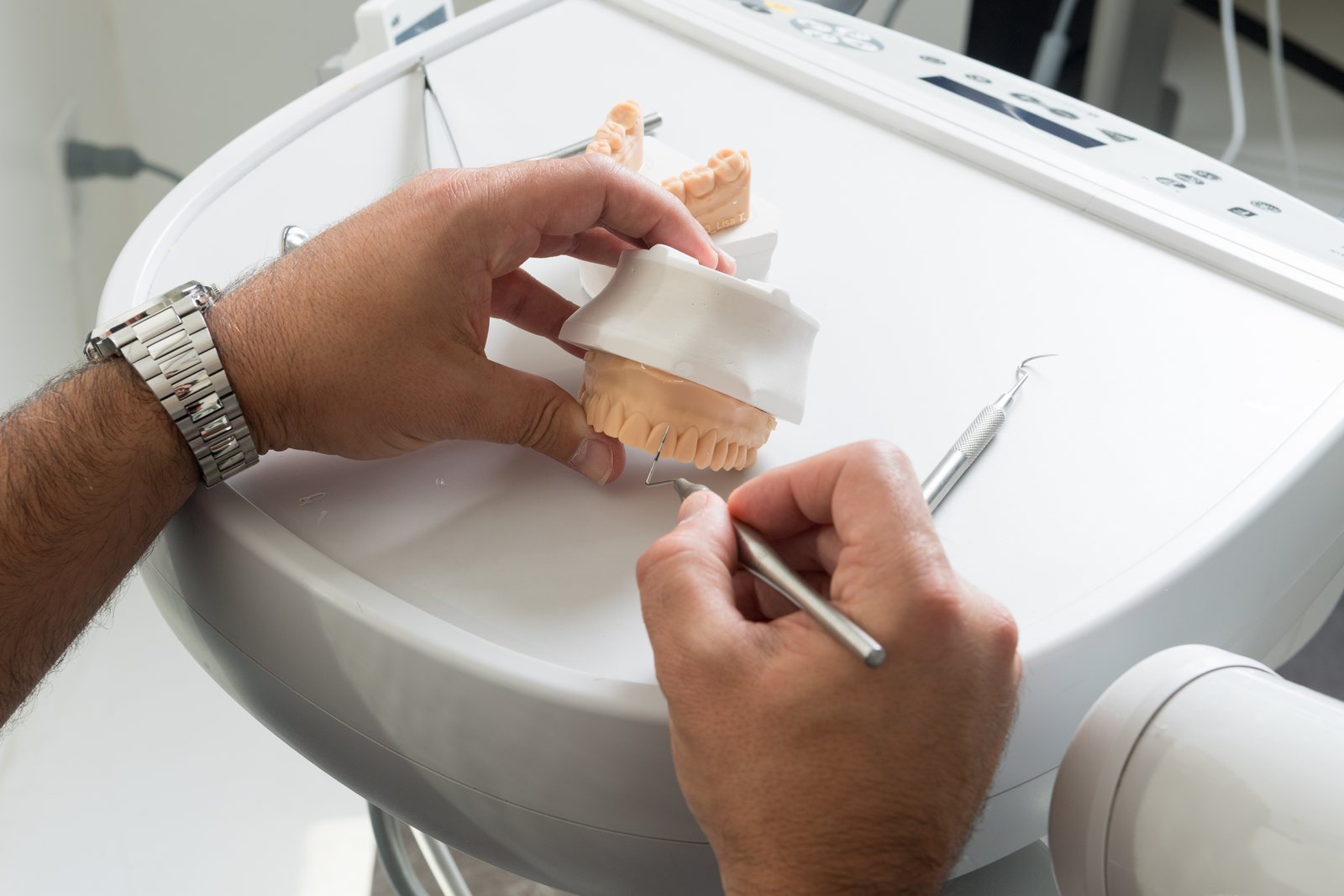
No-prep veneers are the version of porcelain veneers most people hope for: a new smile without having the teeth shaved down first. The two questions that follow are how long they last and whether keeping the enamel makes them any less durable.
This guide is Bedford Dental Group’s full explanation of no-prep veneers: what they are, who they suit, how they are placed, how long they last, and how to make them last longer.
How long do no-prep veneers last?
No-prep veneers typically last 10 to 20 years, the same expected lifespan as standard porcelain veneers at Bedford Dental Group. Because little or no enamel is removed, they bond to strong enamel, which is the main reason well-made porcelain veneers last. Grinding, biting hard objects and skipped checkups are the most common reasons they fail early.
That range is an expectation, not a guarantee for any single tooth. A veneer on a tooth that takes heavy force, or in a mouth where grinding is never managed, may need attention sooner. The habits covered later in this guide make the biggest difference.
What are no-prep veneers?
No-prep veneers are very thin porcelain veneers bonded to the front of the teeth with little or no enamel removed. At Bedford, they are made by Beverly Hills Dental Lab about 0.2 to 0.3 mm thick, and 0 to 0.3 mm of enamel is removed, compared with 0.3 to 0.5 mm for a standard veneer.
They are sometimes called ultra-thin veneers, minimal-prep veneers or non-prep veneers. Durathin and Lumineers are brand names for the same basic approach. Bedford does not place either brand; its no-prep veneers come from the same ceramists who make its standard veneers. The veneers vs Lumineers guide explains how the branded versions compare.
The difference from a standard veneer is direction. A standard veneer replaces a thin layer of the tooth’s front surface with porcelain. A no-prep veneer adds porcelain on top of the tooth as it is, so the tooth ends up slightly fuller.
No-prep veneers vs standard veneers
| No-prep veneers | Standard porcelain veneers | |
|---|---|---|
| Enamel removed | 0 to 0.3 mm | 0.3 to 0.5 mm |
| Veneer thickness | About 0.2 to 0.3 mm | Varies with the case |
| Expected lifespan | 10 to 20 years | 10 to 20 years |
| Bonded to | Enamel | Mostly enamel, with guided preparation |
| Best for | Small, short or worn teeth, thin enamel, spacing | Changing shape and color across full-sized or darker teeth |
| Reversible? | Less permanent in some cases; treat as long term | No |
| Fee at Bedford | $3,950 per tooth | $3,950 per tooth |
| Made by | Beverly Hills Dental Lab | Beverly Hills Dental Lab |
Are no-prep veneers as durable as traditional veneers?
Yes, when they are placed on the right teeth. Durability depends more on what the porcelain is bonded to than on how much enamel was removed, and no-prep veneers are bonded almost entirely to enamel.
The research supports that. In a 12-year study of 580 porcelain veneers published in the International Journal of Periodontics and Restorative Dentistry, veneers with preparations kept within the enamel had a 99% survival rate, while veneers bonded to the dentin underneath were about 10 times more likely to fail.
Studies of no-prep veneers themselves are newer but point the same way. A 2025 systematic review in the Journal of Contemporary Dental Practice found survival rates of 91% to 100% across the trials it included, with no-prep veneers averaging 97% against 92% for conventional veneers. The review drew on only four trials with at least two years of follow-up, so the long-term data is still limited.
Where no-prep veneers are less durable is when they are used on the wrong teeth. A veneer added to a tooth that is already full-sized, or one that sits in a heavy bite, is under more strain at its edges. That is a candidate question, covered next.
Who is a good candidate for no-prep veneers?
At Bedford, no-prep veneers are used for:
- Small or short teeth that need building out in length or width
- Worn teeth, where grinding or erosion has shortened the edges
- Thin enamel, where removing more would risk reaching dentin
- Spacing, including small gaps between the front teeth
Because a no-prep veneer adds thickness, it works best where the tooth needs adding to. On a full-sized tooth, the extra thickness can make it look bulky.
They are generally not the right choice for teeth that are dark from the inside, crowded or out of position, or very different in shape from their neighbors. A 2026 review in Bioinformation reached the same view, noting that no-prep veneers are generally not recommended for deep internal discoloration or misalignment. Those cases usually need standard veneers, orthodontics first, or a different treatment.
Many smiles end up with a mix: no-prep veneers on the teeth that need building out, and standard veneers on the teeth that need reshaping.
How are no-prep veneers placed?
No-prep veneers at Bedford follow the same design-first process as standard veneers, and it usually takes about two weeks: a consultation, then two treatment visits.
- Consultation and records. The dentist examines your teeth, gums and bite, takes photographs and a digital scan, and confirms which teeth suit no-prep veneers.
- Smile design. The new smile is designed from your facial features and 3D printed, so you see the planned shape before any tooth is touched.
- Mock-up. Temporary material is placed over the front of your teeth in the planned shape, so you can see and judge the design on your own teeth.
- First treatment visit. Any minimal shaping the design calls for is done, the tooth surface is prepared for bonding, and the final scan goes to the lab.
- Fabrication. Beverly Hills Dental Lab builds each veneer and matches the shade using the Vita 3D-Master system plus custom shade matching.
- Try-in and bonding. The finished veneers are tried in so you can check them before anything is bonded, then bonded one at a time and the bite is checked.
- Follow-up. You return at one week and six months, then every three to six months for evaluations and cleanings.
The veneer process page covers each step in more detail, including the comfort options available.
What is recovery like after no-prep veneers?
There is no healing period in the usual sense. Most people return to normal eating and speaking straight away.
Some sensitivity to hot and cold is normal for a few days after bonding, and your bite may feel slightly different at first. The one-week visit is where the bite is checked and any small adjustments are made. Sensitivity that lasts beyond one to two weeks is a reason to call; the guide to veneer sensitivity explains what is normal and what is not.
Are no-prep veneers permanent?
Treat them as a long-term commitment. Because little or no enamel is removed, no-prep veneers are less permanent than standard veneers in some cases, but the tooth surface is still prepared for bonding, and removing a well-bonded veneer is not a simple process.
The American Dental Association describes veneer treatment as not reversible. If keeping the option to undo the change matters most to you, composite bonding is the reversible alternative, though it typically lasts 5 to 7 years.
Do no-prep veneers damage your teeth?
No-prep veneers remove little or no enamel, so they leave more of the natural tooth than any other kind of porcelain veneer. Problems usually come from how they are made and placed rather than from the veneer itself.
A no-prep veneer that is too thick at the gum line can trap plaque and irritate the gums. One placed on a tooth that is already full-sized can look bulky and put strain on its edges. That is why the design and the choice of teeth matter as much as the porcelain, and why Bedford designs the smile before deciding which teeth get no-prep veneers.
What makes no-prep veneers fail early?
The same few things shorten the life of any porcelain veneer:
- Grinding and clenching. A study of 318 veneers followed for up to 20 years found that patients who grind their teeth were 7.7 times more likely to have a veneer fail.
- Biting hard objects. Ice, hard candy, pens, nails and opening packages with your teeth can chip or crack porcelain.
- Gum disease and decay. The veneer cannot decay, but the tooth around its edges can.
- Skipped checkups. Small chips and loose edges are simple to fix early and harder to fix late.
How to make no-prep veneers last longer
- Brush twice a day with a soft brush and a non-abrasive toothpaste; whitening and charcoal toothpastes can scratch porcelain.
- Floss daily, sliding the floss gently past the edges.
- Wear a custom night guard if you clench or grind. For full-mouth veneer cases, the guard is included in the veneer fee.
- Wear a sports mouthguard for contact sports.
- Keep your follow-up visits at one week and six months, then cleanings every three to six months.
The veneers aftercare guide covers daily care in full.
How much do no-prep veneers cost?
No-prep veneers at Bedford Dental Group cost $3,950 per tooth, the same as standard porcelain veneers, with the same inclusions: the consultation and records, digital scan and smile design, anesthetic, temporaries, all laboratory fees, and the one-week and six-month follow-up visits. There is no package price; the fee is per tooth.
The no-prep veneers cost guide explains the fee in full, and why it matches standard veneers.
Frequently Asked Questions About No-Prep Veneers
How long do no-prep veneers last?
No-prep veneers typically last 10 to 20 years, the same as standard porcelain veneers at Bedford Dental Group. Bonding to enamel helps them last; grinding, biting hard objects and skipped checkups shorten their life.
Are no-prep veneers permanent?
They are less permanent than standard veneers in some cases, because little or no enamel is removed. The tooth surface is still prepared for bonding, though, so it is safest to treat them as a long-term commitment rather than a reversible one.
Do no-prep veneers last as long as regular veneers?
Yes, when they are placed on teeth that suit them. Both are expected to last 10 to 20 years at Bedford, and research shows veneers bonded to enamel have high survival rates.
What is the recovery time for no-prep veneers?
There is little or no downtime. Most people eat and speak normally straight away. Some sensitivity to hot and cold for a few days after bonding is normal, and the bite is checked at the one-week visit.
Who is a good candidate for no-prep veneers?
People with small, short or worn teeth, thin enamel, or spacing between the front teeth. Teeth that are dark inside, crowded, or already full-sized usually need standard veneers or another treatment first.
Do no-prep veneers damage your teeth?
They remove little or no enamel, so they leave more of the natural tooth than other porcelain veneers. Most problems come from a veneer that is too thick at the gum line or placed on the wrong tooth, which is why the smile is designed first.
How many visits do no-prep veneers take?
About two weeks: a consultation, then two treatment visits. The first prepares the surface and takes the final scan; the second is the try-in and bonding.
How much do no-prep veneers cost at Bedford?
$3,950 per tooth, the same fee and inclusions as standard porcelain veneers. There is no package price; the number of veneers is set by your smile and confirmed in writing after the consultation.
Book a No-Prep Veneer Consultation
The way to know whether no-prep veneers will work for your teeth is a consultation. A Bedford dentist examines your teeth, gums and bite, shows you the design, tells you which teeth suit no-prep veneers, and gives you the number of veneers and the full cost in writing before any treatment begins.
Request a consultation or call (310) 278-2424. Bedford Dental Group, 436 N Bedford Dr., Suite 300, Beverly Hills, CA 90210. For the full picture of veneers at Bedford, see the porcelain veneers page.
