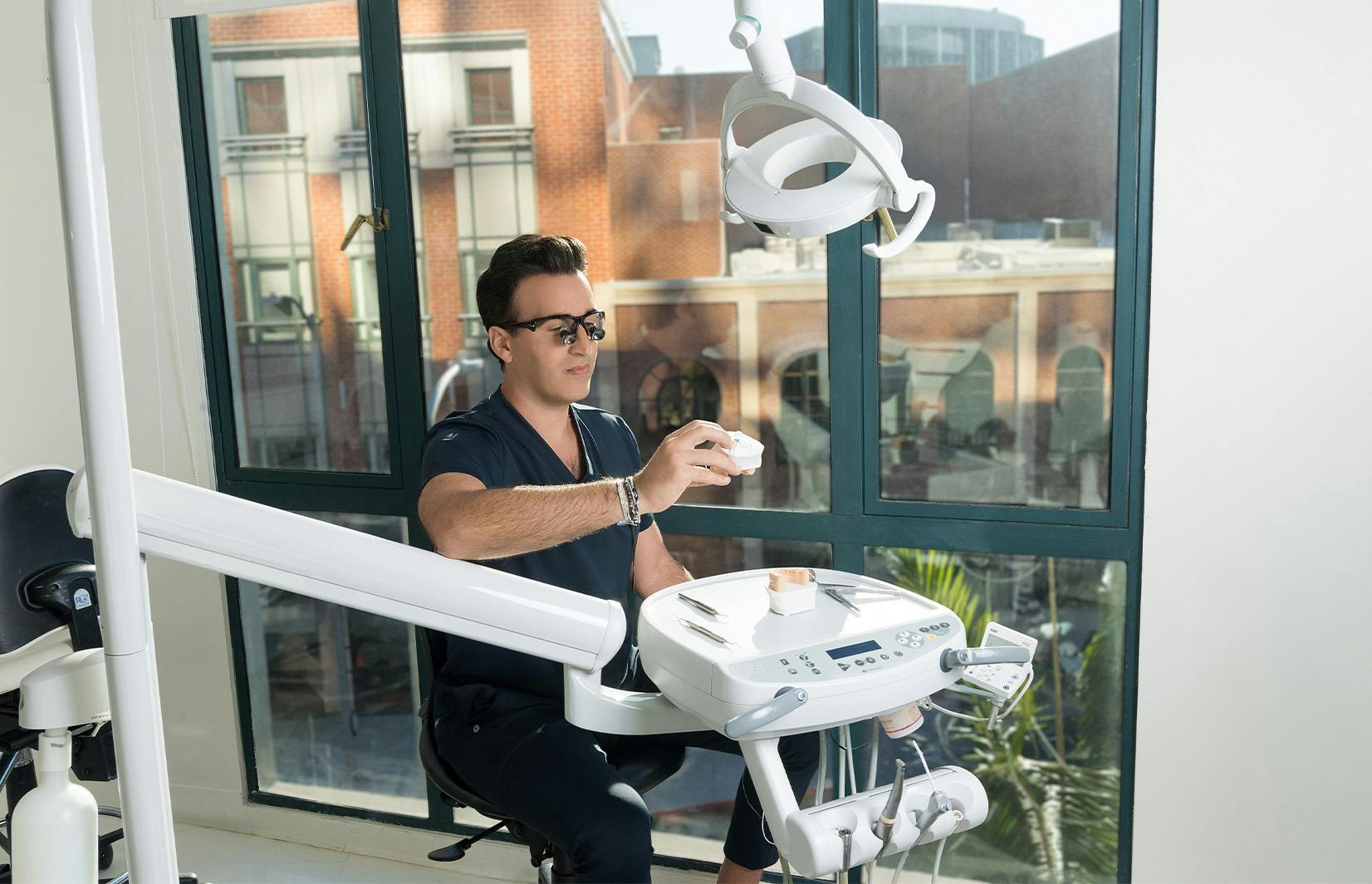
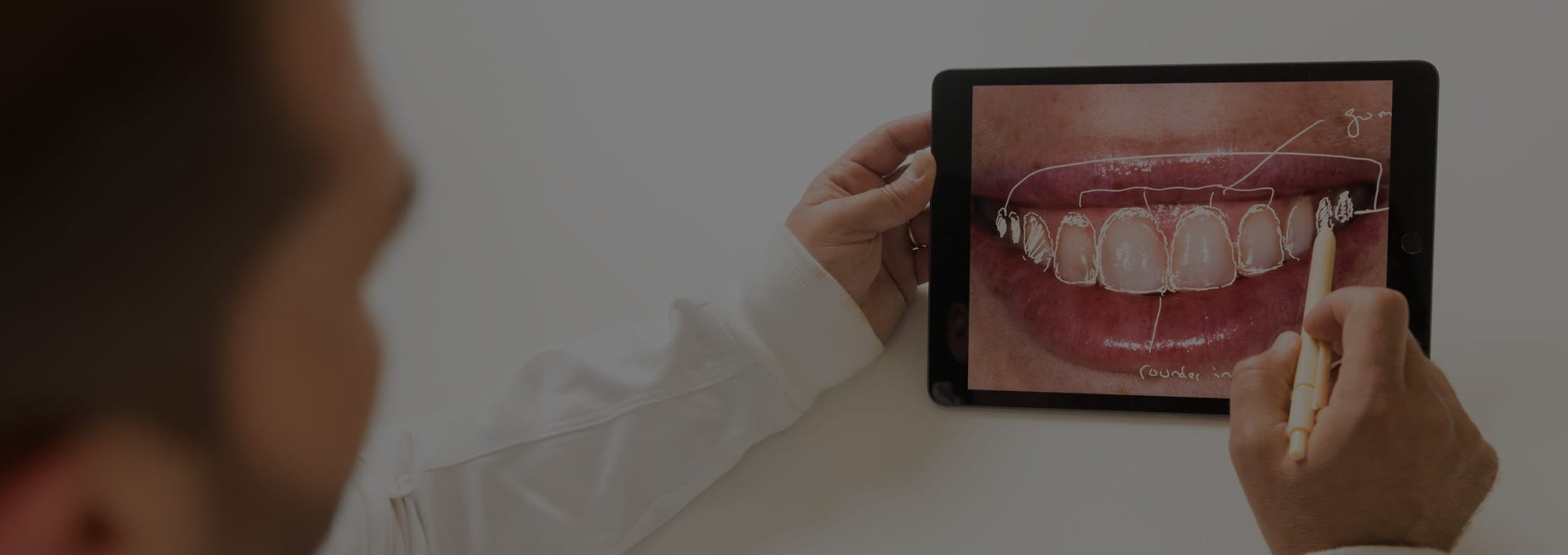
STEP 1: Consultation & Smile Evaluation
Your transformation begins with a conversation. Dr. Naysan examines your teeth, reviews your goals, and evaluates bite mechanics, tooth proportions, and gum health. He also photographs your smile from several angles, which helps inform the design. This stage sets expectations. Some patients need minor adjustments. Others require a combination of veneers and supportive treatments such as whitening, contouring, or implants. The goal is a plan that feels natural to your facial features, not one that forces a dramatic change for the sake of it. What happens at this visit:
- Discussion of cosmetic goals
- Oral exam and gum evaluation
- Photos and digital documentation
- Preview examples of materials and shapes
- Review of treatment timeline and costs
Many patients say this is the moment their anxiety drops. Once they understand the path forward, the process becomes much easier to visualize.
STEP 2: Digital Smile Design
Using the photos and measurements gathered during your consultation, our team builds a digital blueprint of your future smile. This includes tooth shape, length, symmetry, shade, and how the veneers will enhance your natural anatomy. Digital planning ensures predictable, realistic results. Nothing is rushed. Nothing is chosen at random. Every detail is considered before enamel is touched. Why this matters:
- You see a preview before moving forward
- The plan guides the ceramist who hand-creates your veneers
- It reduces guesswork and improves final fit
- It helps align expectations with real outcomes
Designing veneers is part science, part artistry. Dr. Naysan works closely with top Beverly Hills ceramists who specialize in lifelike porcelain work.
STEP 3: Tooth Preparation
Most patients require minimal enamel reshaping to ensure the veneers sit flush and natural. The amount removed is very small, often less than a millimeter. This step allows the veneer to bond securely and prevents a bulky look. Local anesthetic is available, though many patients find this part surprisingly comfortable. During this visit:
- Teeth are gently shaped
- Final impressions or digital scans are taken
- Temporary veneers are placed to protect your teeth
- You preview the general direction of your final smile
Your temporaries will not match the exact final shade or translucency, but they give you a sense of shape, proportion, and overall feel.
STEP 4: Temporary Veneers Phase
You will wear temporaries for one to two weeks while your porcelain veneers are crafted. This stage is an important part of the process. Why it matters:
- It allows you to “test-drive” your smile
- You can identify small adjustments in length or contour
- It helps you get used to the changes gradually
If something feels slightly off, you simply let us know. Those refinements are sent to the ceramist before the final veneers are completed.
STEP 5: Fabrication of Your Porcelain Veneers
While you wear your temporaries, your permanent veneers are sculpted by a master ceramist. Each layer of porcelain is built by hand, which creates the natural translucency and subtle shading that mimic real enamel.
This craftsmanship is a large part of what sets Beverly Hills cosmetic dentistry apart. It is also why the final result looks seamless instead of artificial.
STEP 6: Veneer Placement and Bonding
Once your veneers return from the lab, you come in for your placement appointment. Each veneer is tried in without bonding first so you can see the shade and shape before anything becomes permanent. When you approve the look, the teeth are cleaned and conditioned for bonding. The veneers are then secured with a strong dental adhesive and cured with a specialized light. During this appointment:
- Veneers are checked for symmetry and bite
- Shade is finalized
- Bonding is completed one tooth at a time
- Final polishing is done to create a natural finish
You leave this visit with your full, finished smile.
STEP 7: Follow-Up Visit & Aftercare
A quick follow-up appointment ensures your veneers remain comfortable and aligned with your bite. Small adjustments can be made if needed.
This visit also protects the long-term success of your restorations. Most patients complete this final step one to two weeks after placement.