

Last updated: October 2025
Quick Answer
If you’re hoping to whiten your porcelain veneers with traditional bleaching products, the short answer is no — whitening treatments don’t change the color of porcelain.
However, that doesn’t mean your veneers are destined to lose their brilliance. With professional polishing, good at-home care, and a few smart adjustments, you can maintain their luminous, natural-looking finish for years to come.
Why Porcelain Veneers Don’t Respond to Whitening
Porcelain veneers are made from a glass-like, non-porous ceramic that’s naturally resistant to stains and discoloration. While this makes them durable and long-lasting, it also means whitening gels and strips simply don’t work on them.
Whitening agents are designed to penetrate the pores of natural enamel and dissolve deep stains. Because porcelain doesn’t have those microscopic pores, bleaching agents can’t reach beneath its surface.
If your veneers appear darker than before, the porcelain itself hasn’t changed — it’s usually the surrounding natural teeth that have darkened slightly, creating a visible contrast in color.
How to Restore and Maintain Veneer Brightness
Professional Polishing and Cleaning
At Bedford Dental Group, we use fine-grit polishing pastes and veneer-safe instruments to gently remove surface buildup and restore the original glaze. This quick, noninvasive treatment removes residue from coffee, tea, and wine and revives the natural sheen of your veneers.
Re-Glazing or Replacement
If your veneers are older, scratched, or slightly dull, re-glazing can renew their reflective finish without a full replacement.
For veneers that are over 10–15 years old or visibly mismatched to your current tooth shade, selective replacement may be recommended. Modern porcelain materials offer greater translucency and more natural light reflection than earlier generations.
Whiten Surrounding Teeth
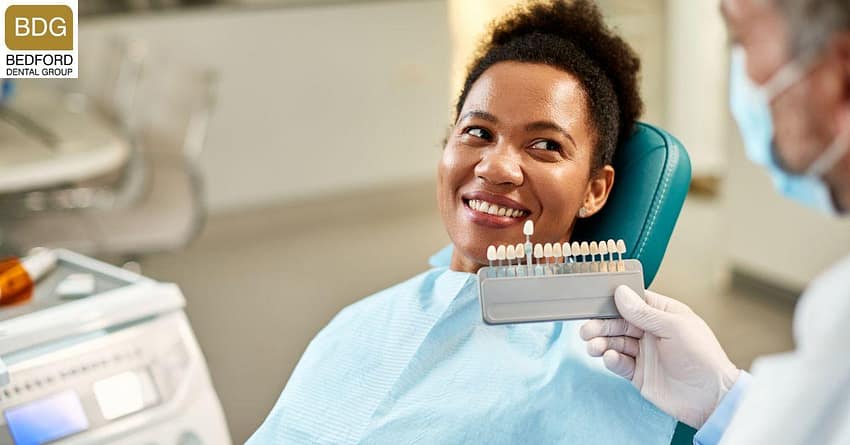
Because porcelain veneers can’t be whitened, lightening your natural teeth can make your entire smile appear brighter and more uniform.
Dr. Daniel Naysan often recommends professional whitening before veneer placement — or years later when natural enamel darkens over time — to keep color harmony across all visible teeth.
At-Home Care to Keep Veneers Bright
Long-term veneer brightness depends on consistent, gentle care. Incorporate these habits into your routine to preserve that radiant look:
Use a soft-bristled toothbrush and non-abrasive fluoride toothpaste.
Floss daily or use a water flosser to prevent buildup around veneer edges.
Rinse your mouth with water after drinking coffee, tea, or red wine.
Avoid smoking or vaping, which can stain bonding edges and nearby enamel.
Wear a nightguard if you grind or clench your teeth to prevent surface micro-scratches.
These small, daily steps help extend the life and beauty of your veneers while protecting your overall oral health.
When to Consider Updating Your Veneers
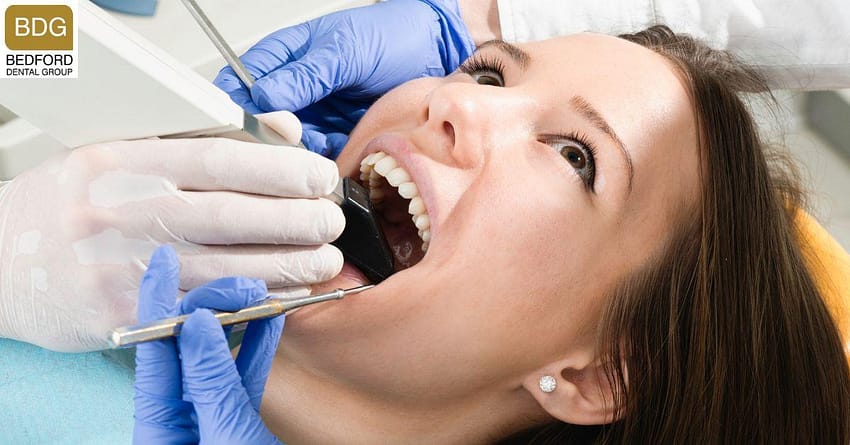
Even expertly crafted veneers can show wear over time. As your gumline, enamel color, and facial contours subtly change, older veneers may no longer look as seamless as they once did.
Replacing outdated veneers allows Dr. Naysan to refresh your smile with ultra-thin porcelain designs that reflect light more naturally, blend precisely with your surrounding teeth, and maintain their brightness longer.
During your consultation, he’ll evaluate your veneers’ condition and recommend whether a professional polish, re-glaze, or replacement will best achieve your goals.
Frequently Asked Questions About Veneer Whitening
Can whitening strips or gels make veneers lighter?
No. Whitening products work only on natural enamel and have no effect on porcelain or bonding materials.
Can my hygienist scratch my veneers during a cleaning?
Not if the right techniques and materials are used. At Bedford Dental Group, we use veneer-safe tools and polishing agents that protect the glaze and preserve the smooth finish.
Can you whiten the cement underneath veneers?
No. Whitening agents can’t penetrate the porcelain to reach the underlying bonding cement. If discoloration appears at the edges, polishing or replacement may be needed.
Why do my veneers look dull even after cleaning?
Dullness often results from micro-scratches or contrast with darker surrounding teeth, not from actual staining of the porcelain.
How long do veneers stay bright?
With proper care and regular professional cleanings, veneers can maintain their color and shine for 10–15 years or longer before any refinishing or replacement is needed.

Bring Back Your Veneers’ Brilliance
A beautiful smile doesn’t require constant whitening — it requires expert craftsmanship and proactive care.
If your veneers have lost their sparkle or seem dull, Bedford Dental Group can help restore their natural glow through professional polishing, re-glazing, or replacement with advanced porcelain materials.
Schedule a consultation with Dr. Daniel Naysan in our Beverly Hills office to discover how to refresh your veneers and keep your smile looking its best for years to come.
0 comments